Flooding in Mogadishu and Across Somalia: Why Climate Resilience and Drainage Matter More Than Ever
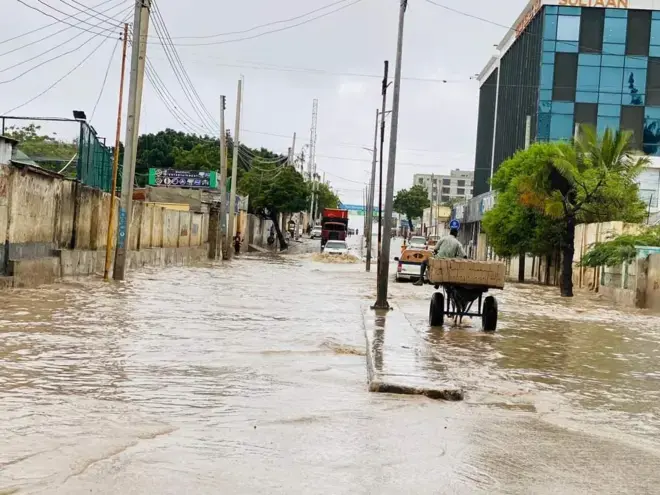
Flooding has become one of the most urgent climate and urban challenges facing Mogadishu and many parts of Somalia. In 2025 and 2026, heavy rains once again disrupted roads, damaged homes and businesses, and exposed the weakness of drainage systems that are still unable to handle sudden downpours.
For many communities, floods are not just a seasonal inconvenience; they are a crisis that affects livelihoods, safety, health, and mobility. Reports from Mogadishu show that heavy rainfall can quickly block streets, overwhelm drainage channels, and leave neighborhoods submerged, especially in low-lying and fast-growing urban areas.
In Banadir, authorities have already responded with emergency measures to clear clogged drainage channels, reinforce roads, and improve coordination ahead of more rainfall. At the same time, local and international partners have highlighted the need for longer-term solutions, including modern drainage infrastructure, flood retention ponds, and stronger urban planning to reduce future losses.
The impact of flooding is severe. In Mogadishu, recent flood events have affected roads, transport, homes, and essential services, while humanitarian reports in 2025 also documented deadly flash floods and widespread displacement in Banadir and other parts of Somalia. These repeated disasters show that flooding is no longer an isolated event; it is a recurring threat that demands serious investment in resilience.
One encouraging example comes from Boondheere District in Mogadishu, where rehabilitating a long-neglected pond helped reduce flooding and improved safety for nearby residents and businesses. The World Bank reported that the project benefited thousands of people and is now seen as a model for urban climate resilience in the city.
Somalia’s flood problem is closely linked to climate change, rapid urban expansion, damaged infrastructure, and weak drainage maintenance. When rainwater has nowhere to go, it collects on streets, enters homes, damages property, spreads disease, and disrupts daily life. That is why drainage systems are not a luxury — they are a basic public safety need.
To protect lives and property, Somalia needs more than emergency cleanup after every storm. It needs durable drainage networks, maintained canals, flood retention areas, better early warning systems, community awareness, and urban planning that reflects the reality of a changing climate.
Biosahan believes that climate resilience must become a national priority. Mogadishu and other Somali cities deserve infrastructure that can withstand heavy rainfall, protect families, and support economic growth instead of losing progress every rainy season.
#Biosahan #Mogadishu #Somalia #Floods #ClimateResilience #DrainageSystem #UrbanResilience #ClimateAction #Banadir #GuRain